
New Laurentia
New Laurentia is the 100 km² Canadian and North American wilderness that opened Steam Early Access on 26 March 2026 and remains the first hunting ground in Version 1.0. The story hook is an investigation into unusual moose behavior, run with a dog trainer and a former warden. Fifteen hunt-able species live here, from wolverine and grizzly to elk, mule deer, and the Update 0.3 pronghorn and wild boar.
Forest, wetland, and the moose file
The map mixes timber, wetland, and mountain in a single 100 km² sheet, which is why the atlas treats it as a chapter rather than a list of GPS pins. Community need-zone maps exist for New Laurentia, but those pins are player-placed and are not copied here. What the studio did publish is the moose investigation: you work with a dog trainer and a former warden to explain animals that are not behaving like a healthy herd.
Because this ground shipped first, it also collected the later North American additions. Rocky Mountain pronghorn and Central European wild boar arrived in Update 0.3.0, so a 1.0 hunter on New Laurentia is not limited to the original Early Access thirteen. Headquarters later borrowed five of these animals for the lodge map, which is why a mule deer or elk can show up on both sheets without being a second official reserve.
Fifteen species on the Canadian sheet
The New Laurentia roster is American wolverine, grizzly bear, Dall sheep, Eastern wild turkey, Northwestern grey wolf, mallard, Western moose, white-tailed ptarmigan, Rocky Mountain elk, Rocky Mountain mule deer, snowshoe hare, northern white-tailed deer, wood bison, Rocky Mountain pronghorn, and Central European wild boar. Classes run from mustelid and predator through ungulate, bird, and small game.
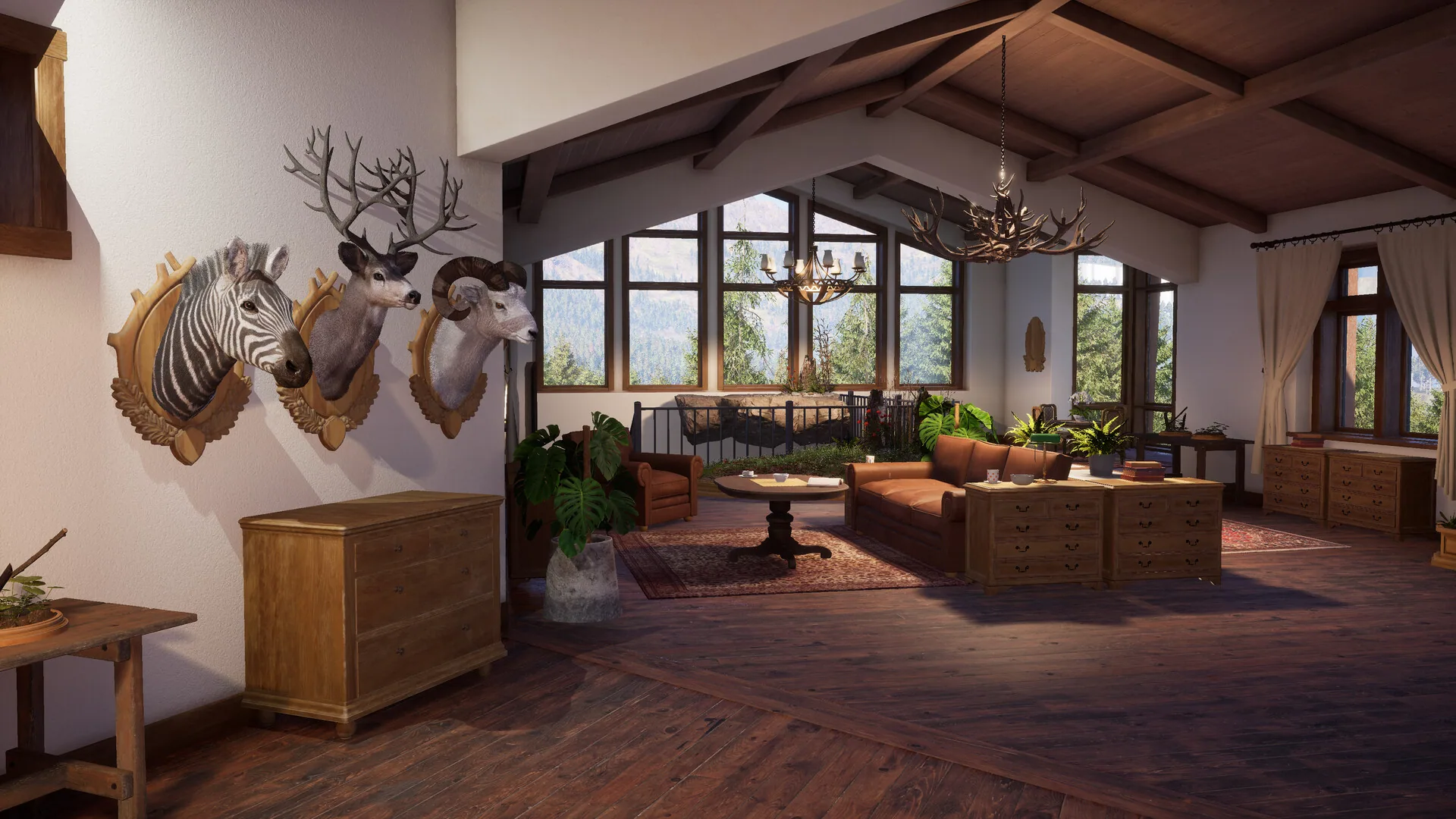
Mallard, white-tailed ptarmigan, Rocky Mountain elk, Rocky Mountain mule deer, and snowshoe hare also appear on Headquarters. If you want a quiet range day plus a short hunt, those five are the overlap. Predators and the large ungulates stay on the 100 km² wilderness. Filter the species ledger by New Laurentia when you need the full fifteen in one table.
How a first hunt here actually starts
Bring the dog. Sign search and life-zone finds matter more in timber than on an open Kilimaya pan, and blood tracking is the difference between a clean moose recover and a night of guessing. Shot review still runs after every round, so a bad angle is visible in the bullet camera instead of hidden in a score. Ammo loadouts let you keep a second rifle load in the pack once you have bought the extra type at the lodge.
Herd tools are on this map as well as Kilimaya: feeders, bridges, pollution, and invasives all feed the fitness number that Update 0.4.0 tied to group size. If a moose herd looks thin, the infrastructure jobs are the lever, not a hidden spawn table. For a second outing, Kilimaya is the contrast chapter — same 100 km² size, African dangerous game, and a different story cast.
Camps, weather, and the dog in timber
New Laurentia is the timber classroom. Sign search pays in dense trees because you cannot see a moose at 400 metres the way you see a wildebeest on a pan. Life-zone finds cut the walking. Blood track is how a quartering moose becomes a recover instead of a story you tell at the lodge. Take a second rifle load in the backpack once you have bought it: the default round is free, the alternate is not.
Weather and time of day still matter even without a published climate table. Hunt the wetland edges for mallard and moose, the open ridges for elk and sheep, the thick stuff for boar and wolverine. The 0.3.0 pronghorn wants the open Canadian ground, not a Kilimaya waterhole. When the herd looks thin, repair feeders and pollution before you blame a spawn. Then hang the head at Headquarters and come back for the warden’s moose file.
A community map can show camps other players marked. Treat those pins as gossip. The official facts on this sheet are the 100 km² size, the fifteen names, the moose hook, and the five animals that also wander the lodge map. That is enough to plan a week of hunts without inventing GPS.
What to carry on the Canadian sheet
A 1.0 kit for New Laurentia is the dog, a rifle you have sighted at Headquarters, and a second ammo type if you bought one. Wolverine and grizzly want respect in thick timber. Dall sheep and pronghorn want the open. Turkey and mallard want the 0.4.0 shotgun work. Moose is the story animal; miss the placement and the blood track is the rest of your afternoon.
ZEISS glass from 0.3.0 is already in the base game, so you do not need Deluxe to glass an elk on a ridge. Night thermal from 0.1 is already in the base game too. Heirloom’s .243 is a nice Early Access gift, not a requirement. If you only own Standard, Evoke, Helix, and Cascade still hunt this map.
When you are done with the warden and the trainer, Kilimaya is the other 100 km², not a harder New Laurentia. Different animals, different NPCs, same dog commands. Headquarters is the hall for both. That split is the whole 1.0 geography.
Glass the timber edges at first and last light for moose and elk, then send the dog. The warden’s file is a story, but the animals still use the 100 km² like a real wilderness, not a shooting gallery.
Take the trainer’s advice, then hunt the wetland at dusk.
Related pages: Kilimaya Reserve Headquarters Species